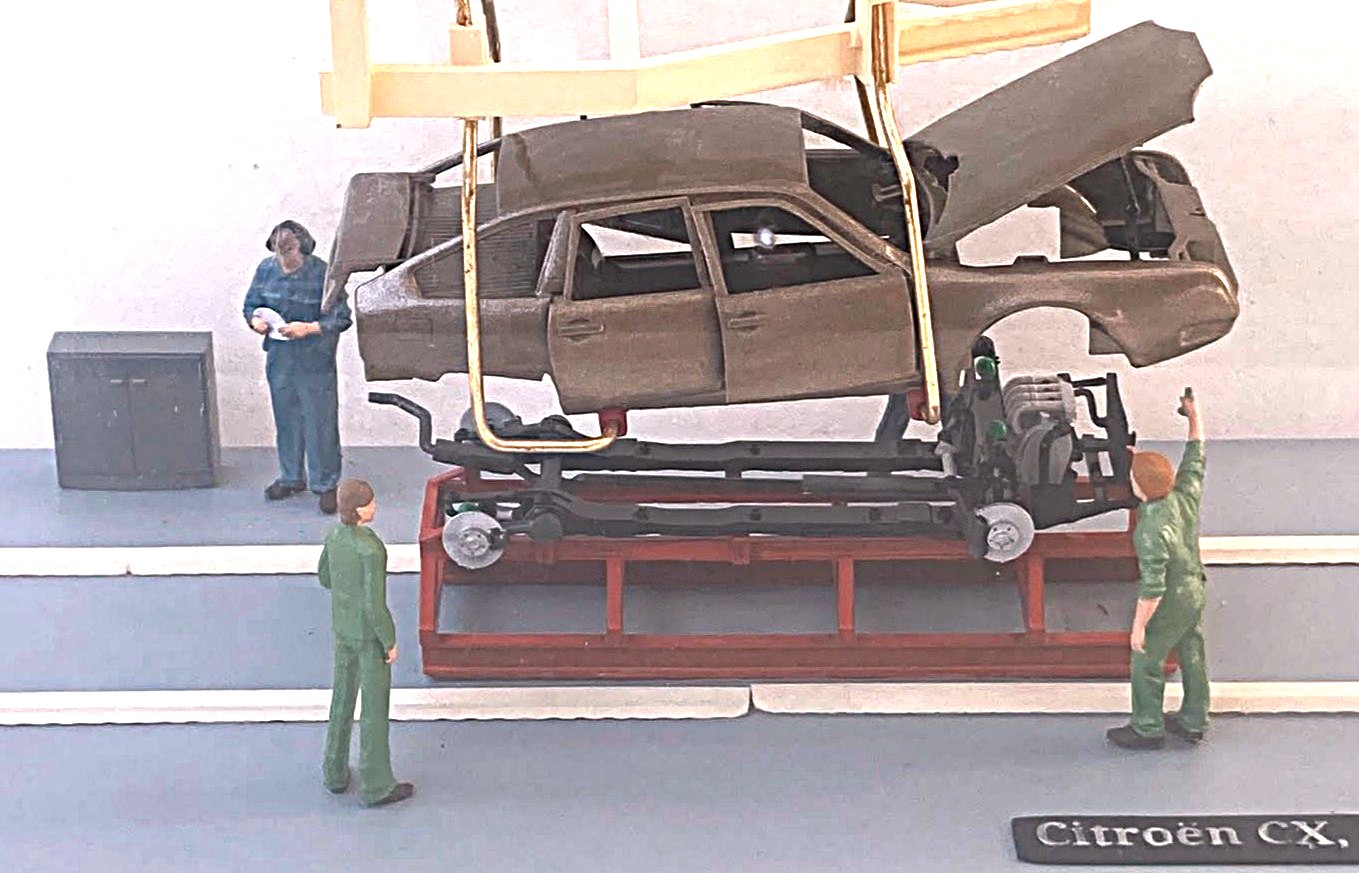
After the Citroën Citela, here is a new project born from our collaboration with Peter, better known as Marpytoys. This time, it wasn't simply a matter of reproducing a Citroën CX in 1:43 scale, but of capturing a very specific moment in its birth on the assembly line: the «marriage» between the bodywork and the mechanical assembly.
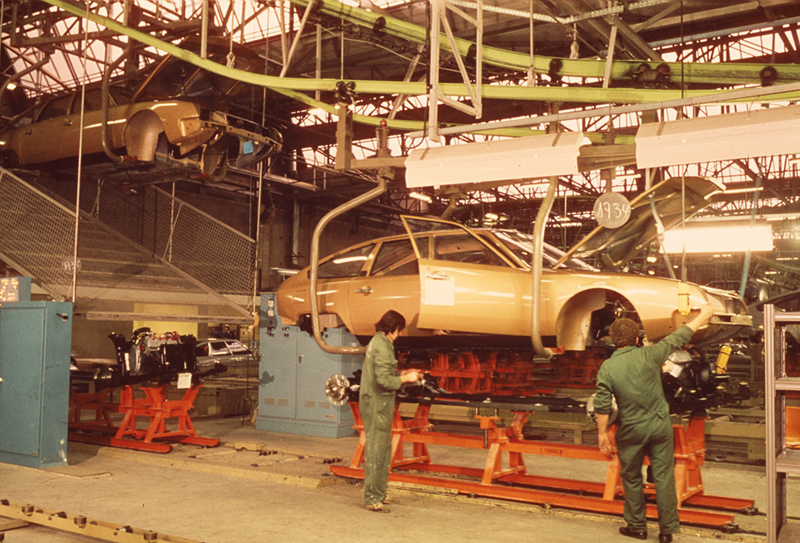
The idea came from Peter. It is a natural extension of the subjects dedicated to car manufacturing and’Citroën plant in Aulnay-sous-Bois already featured on Garage143. A period photograph served as the starting point for this industrial scene, now recreated in the form of a particularly original miniature diorama.
The «marriage» of the CX on the Aulnay-sous-Bois assembly line. Photo credit: Mounicq / Citroën.
Aulnay-sous-Bois, industrial cradle of the CX
Commissioned in 1973, the Aulnay-sous-Bois plant began assembling the CX in June 1974. It was then considered one of the most modern car plants in Europe. Body assembly, painting, upholstery and final assembly were all brought together there, with a high degree of automation for the time.
Among the most spectacular moments of this manufacturing process is the marriage. The painted bodywork, suspended from its overhead conveyor, meets the mechanical assembly prepared on the lower line: engine, transmission, running gear, suspension and other essential components. The two parts, until then separate, then become a single car. It is precisely this moment that Peter wanted to reproduce.
From archive photography to 3D modelling
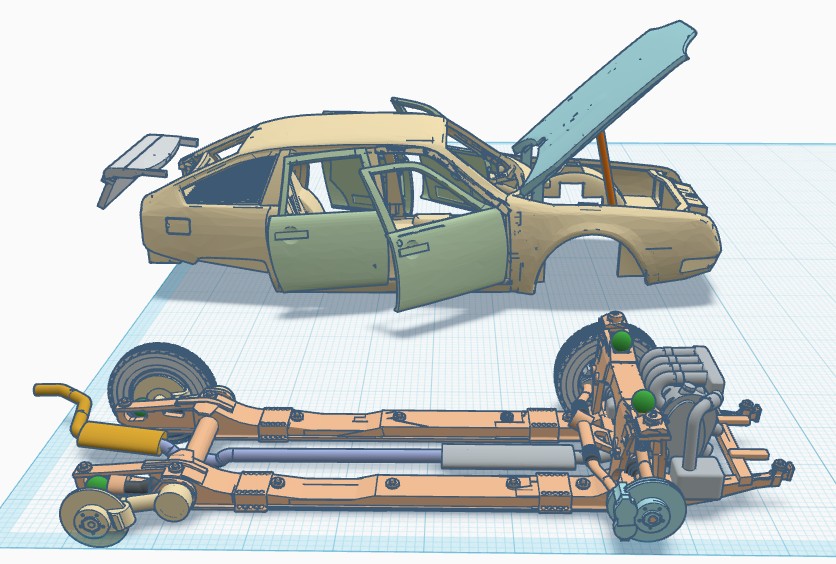
To recreate the scene in 1:43 scale, it was first necessary to break down the original image and understand the layout of the workstation. The CX had to remain perfectly recognisable while being depicted in an unusual state: bodywork suspended, bonnet and doors open, mechanical assembly visible and the assembly line reconstructed.
The bodywork and the mechanical assembly are modelled separately. Photo credit: Marpytoys.
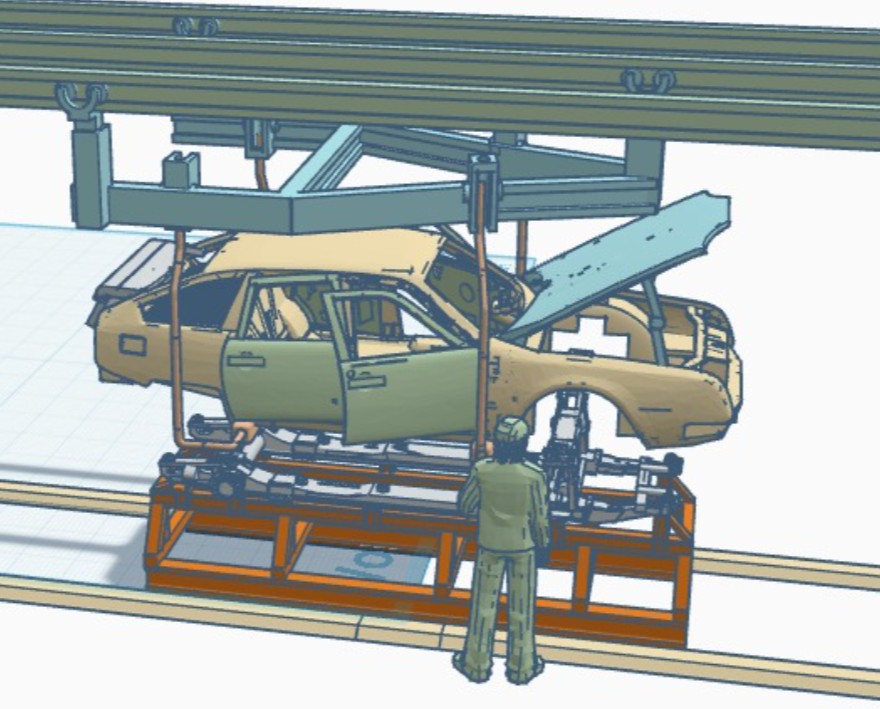
Garage143 provided a CX body modelling base (used for other projects such as for example: https://garage143.fr/les-dioramas-un-plaisir-un-art/Peter then reworked this modeling and designed the entire factory environment: the assembly station, the conveyor, the lifting structure and the figures that bring the scene to life. He also took care of the 3D printing, painting and assembly of the whole thing.
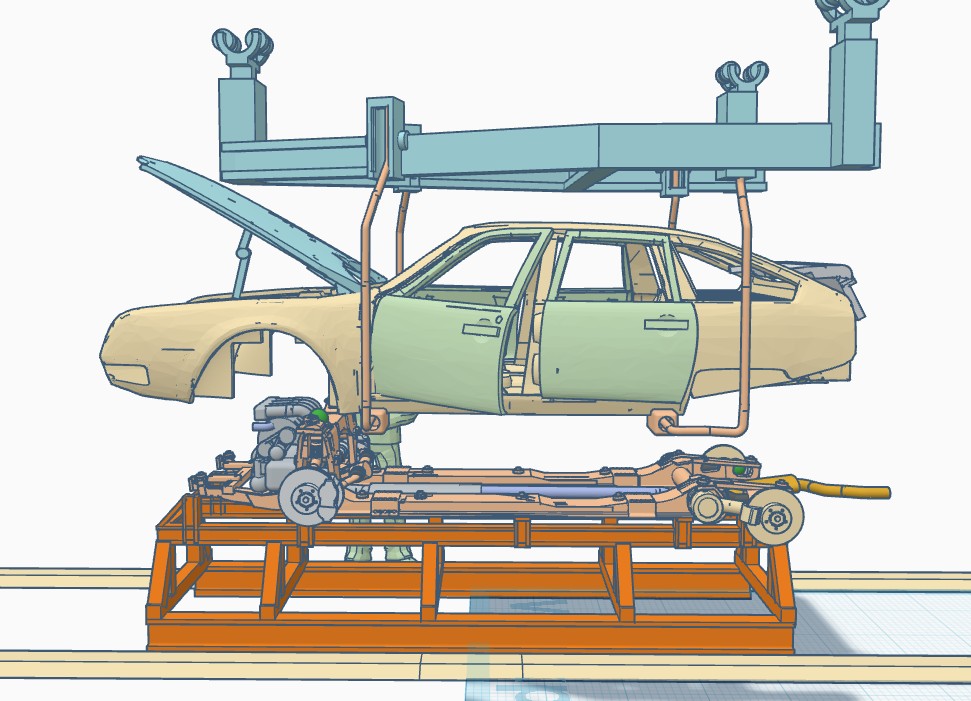
Virtual reconstruction of the wedding station before printing. Photo credit: Marpytoys.Studying the complete scene makes it possible to adjust the position of each element. Photo credit: Marpytoys.
A diorama telling the story of how the CX was made
The result is not limited to a scale model car. It is a genuine slice of factory life that takes place in a display case. The CX body shell still seems to float above its mechanical parts, held in place by the handling system. The workers accompany the operation, while the base, the equipment and the identification plaque immediately place the scene back in its context.
At this scale, the whole assembly also makes it possible to observe what usually remains hidden beneath the bodywork: the mechanical layout, the running gear and the famous hydropneumatic suspension. The diorama thus tells the story of an automobile's complexity better than a finished miniature at the very moment it becomes complete.
The finished 1/43rd scale diorama: the bodywork is reunited with its mechanical assembly. Photo credit: Marpytoys.
A creation proposed by Marpytoys
This new collaboration illustrates once again what the sharing of ideas and skills can bring to our passion. The bodywork modelling carried out by Garage143 met Marpytoys' expertise in set design, printing, painting and assembly.
The Citroën CX wedding stage diorama is offered for sale. To discover this creation and place an order, go directly to the website of Marpytoys.
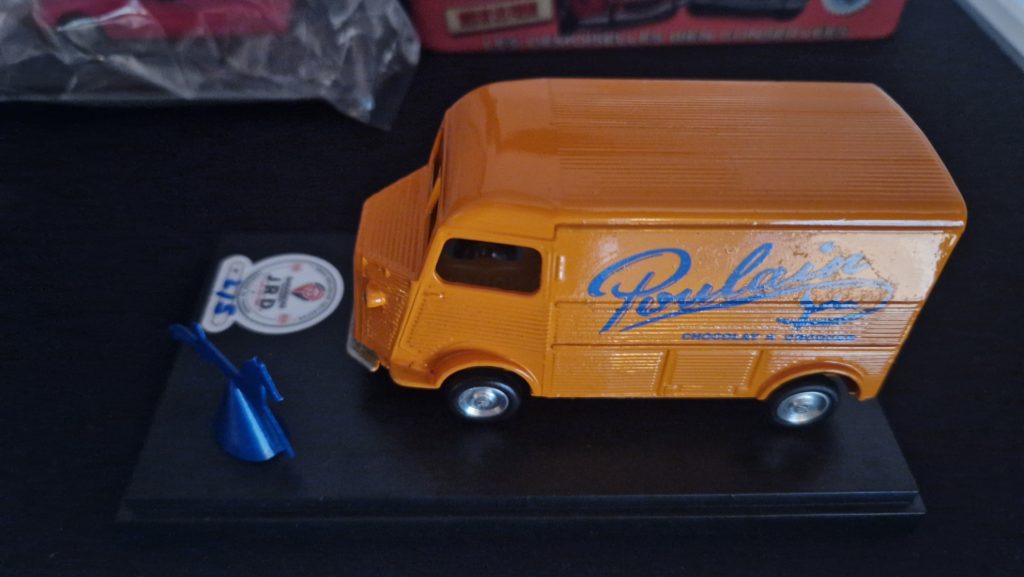
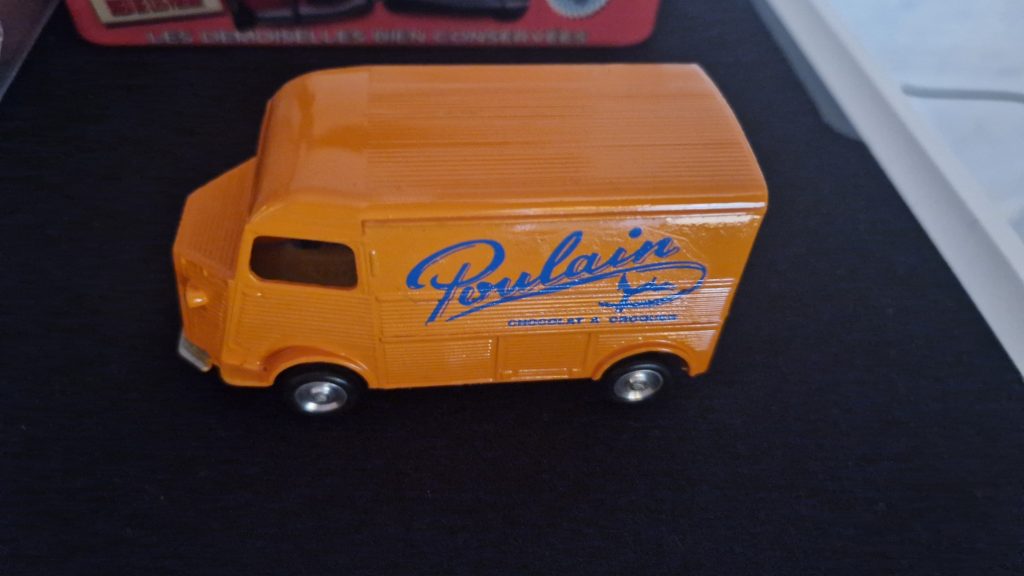
Citroën Type H 1200 kgs JRD 1985: an original stock comes back to life
A fine discovery for collectors
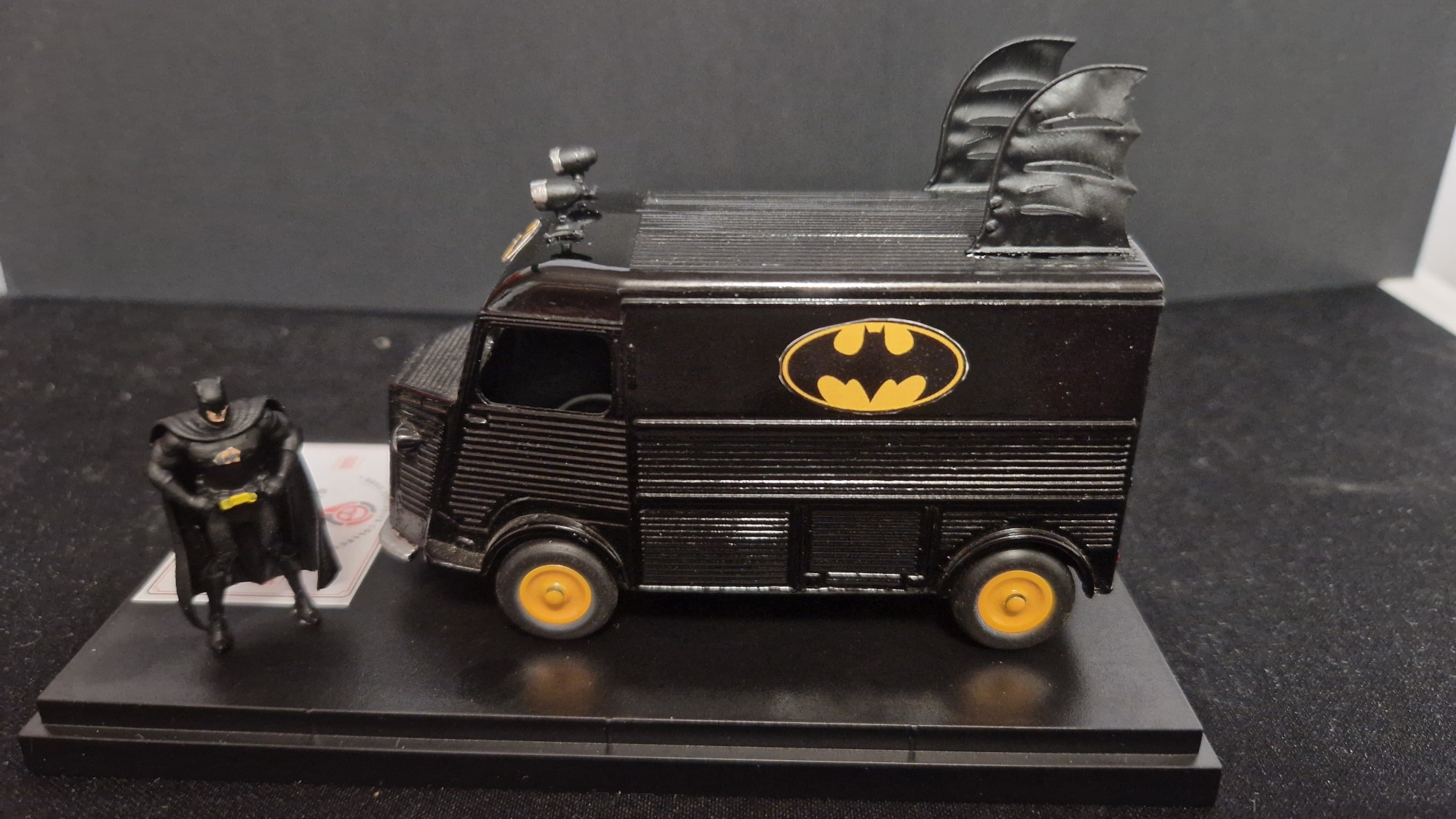
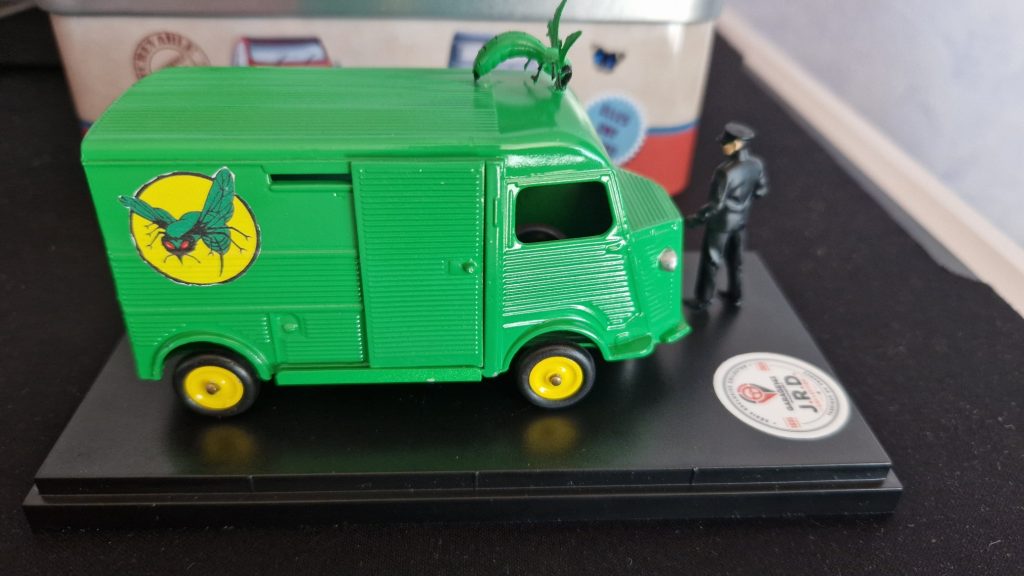
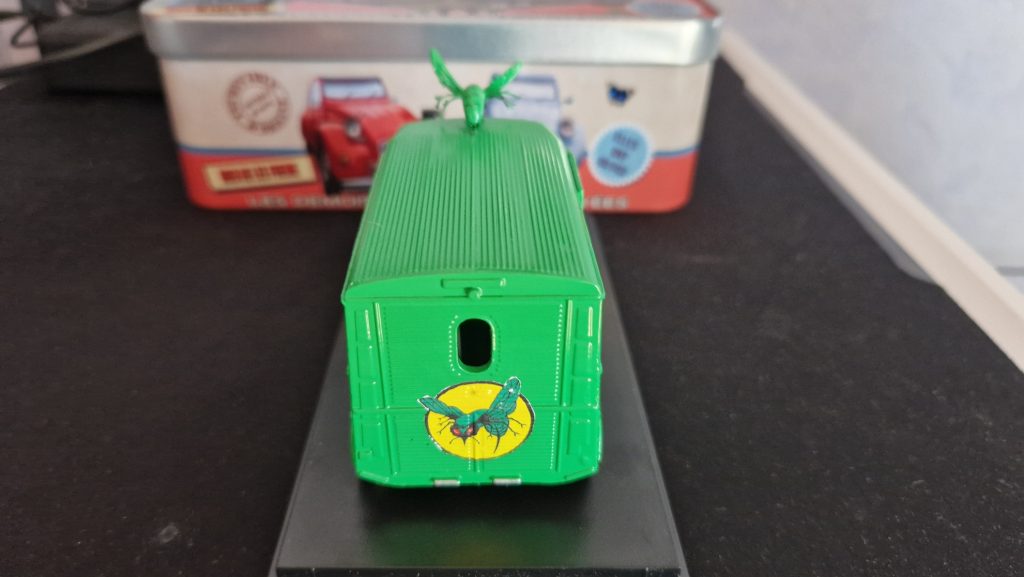
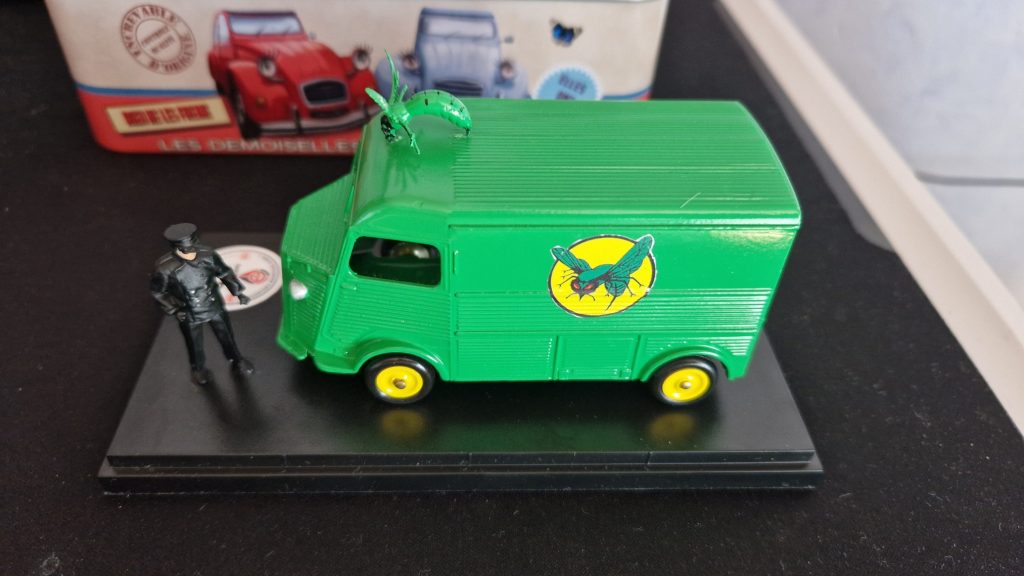
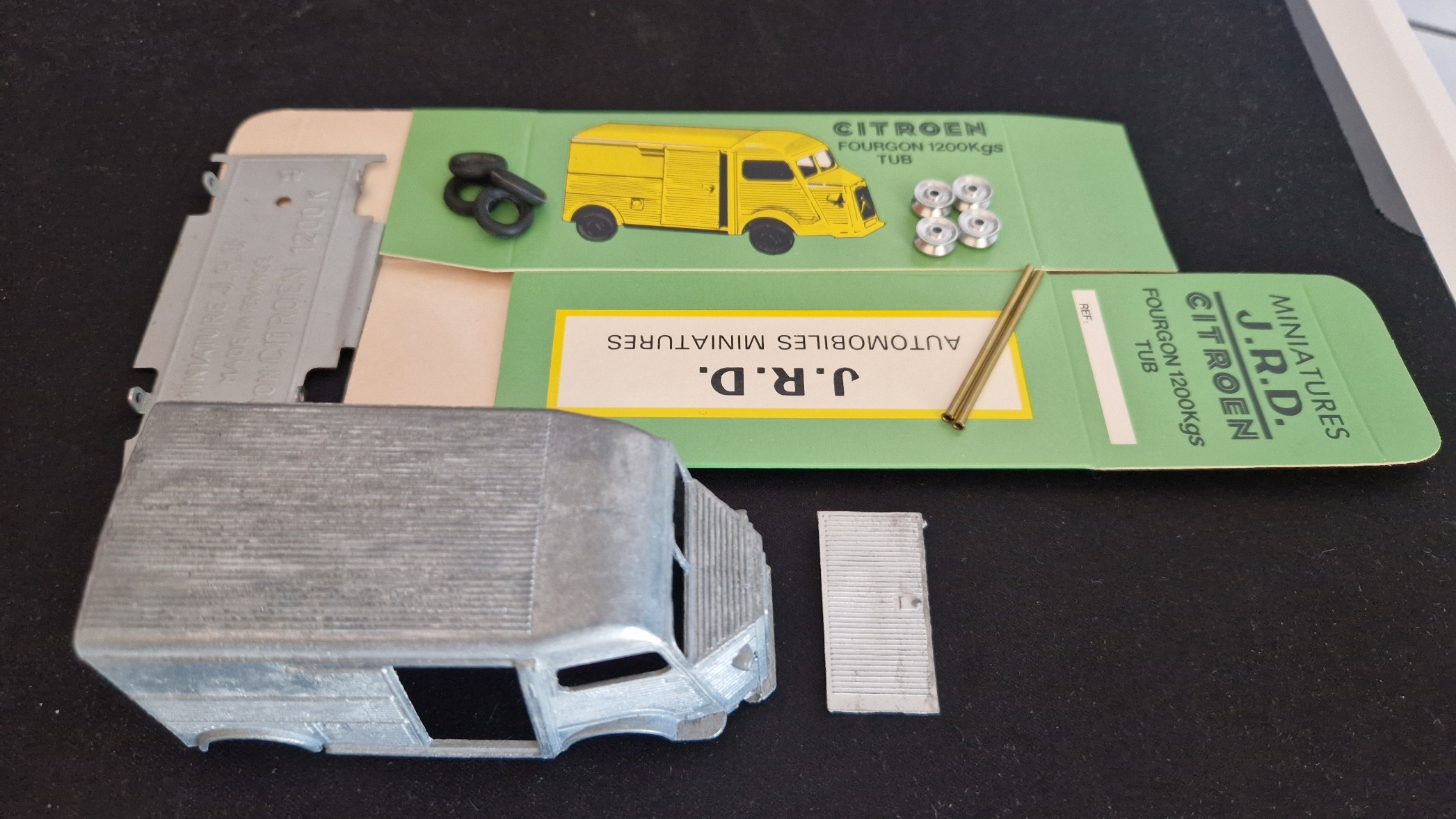
It sometimes happens that a forgotten stock resurfaces and breathes new life into a miniature steeped in history. This is precisely what has just happened with the Citroën Type H 1,200 kg produced by JRD 1985.
I recently had the opportunity to buy back some original stock of this model. A particularly interesting find for fans of French miniatures, Citroën vehicles and, of course, the JRD brand.
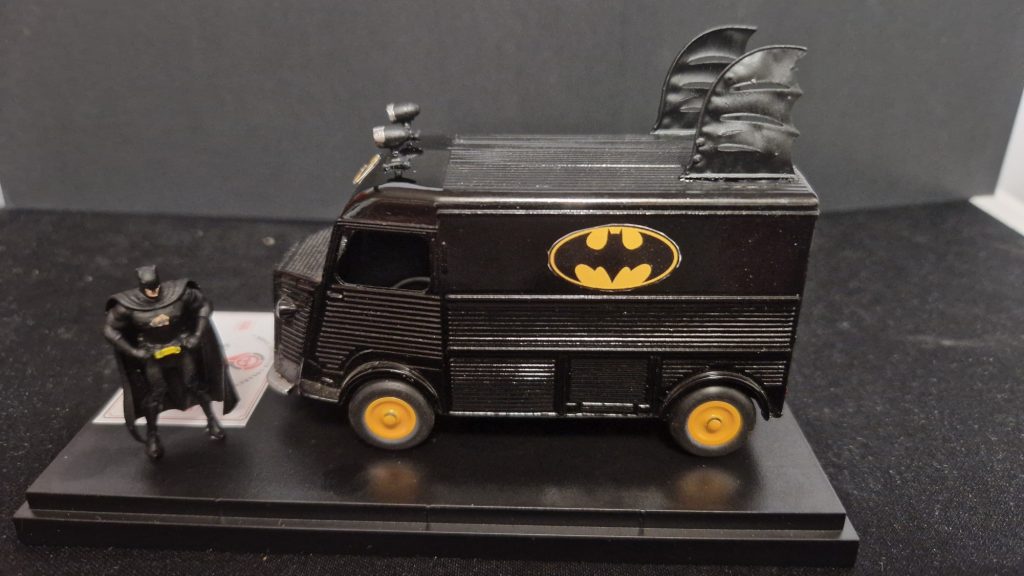
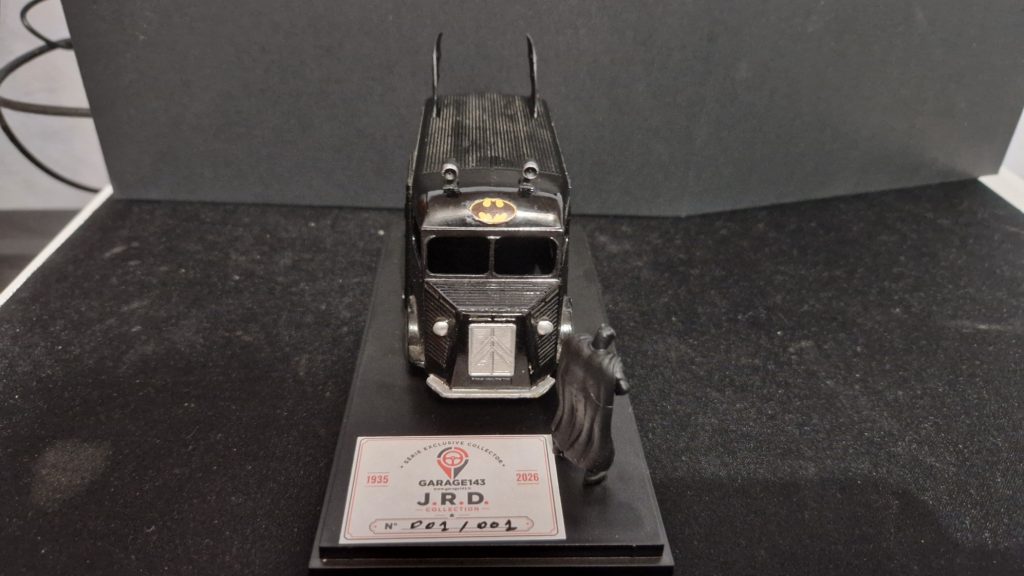
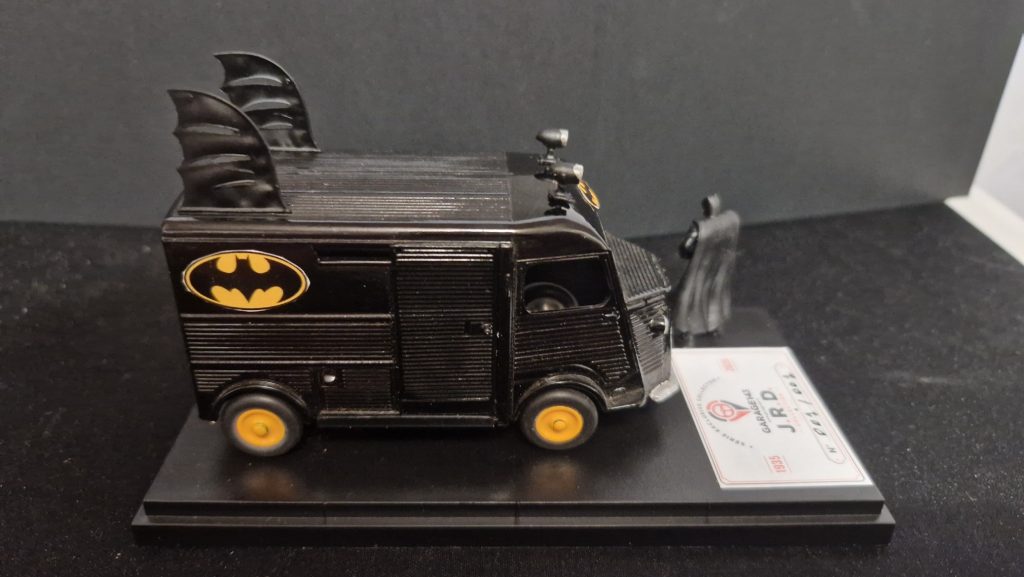
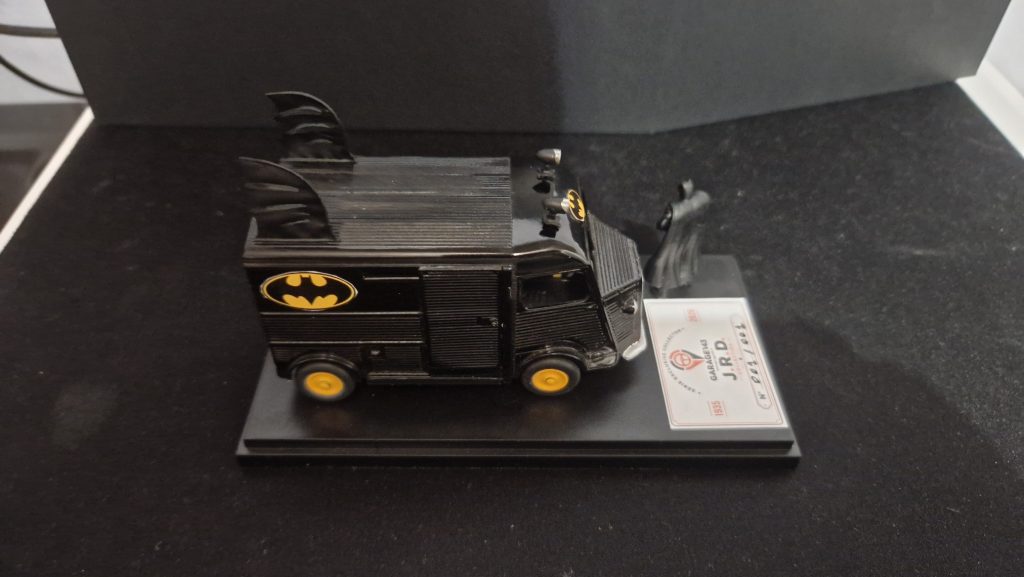
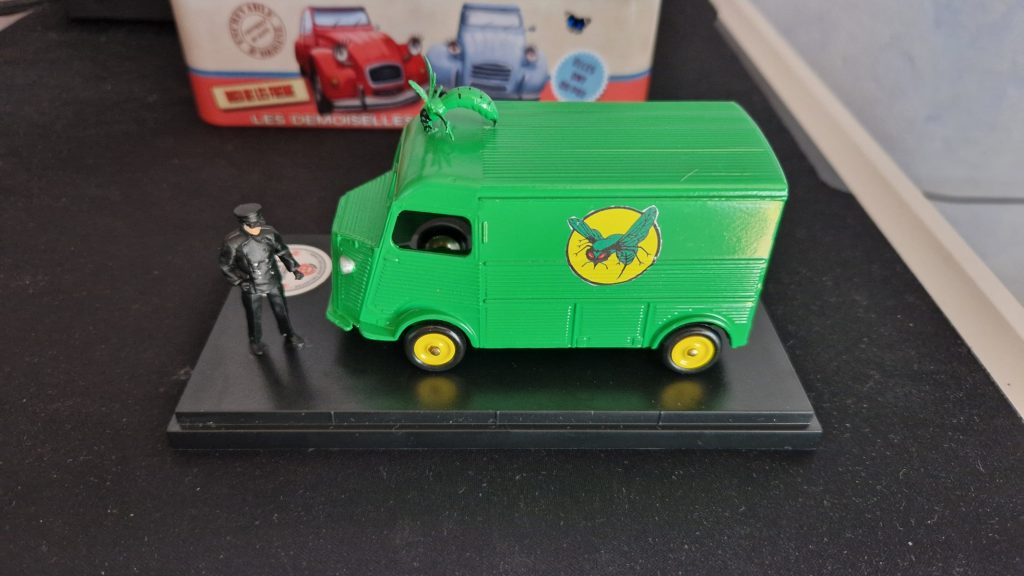
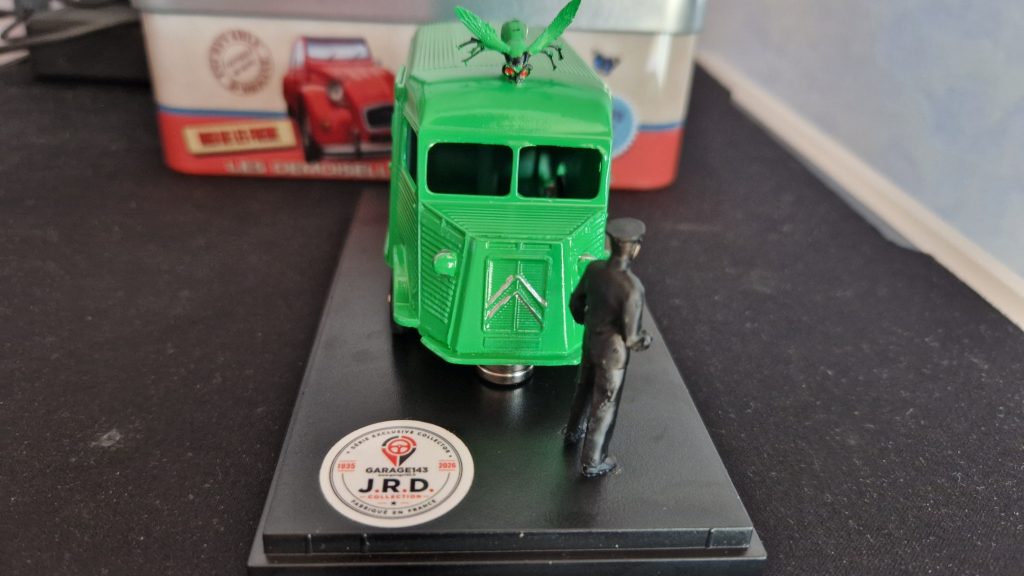
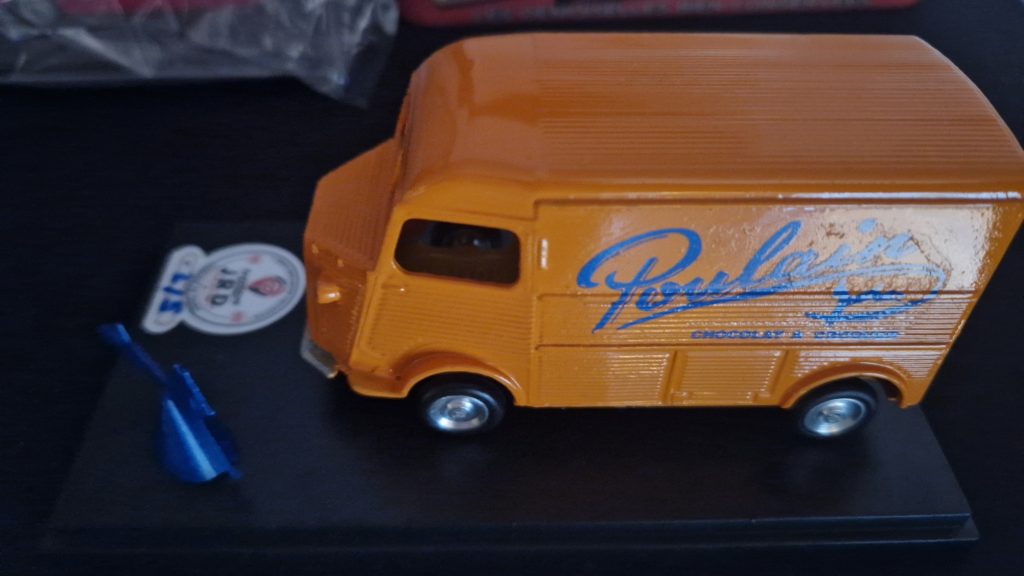
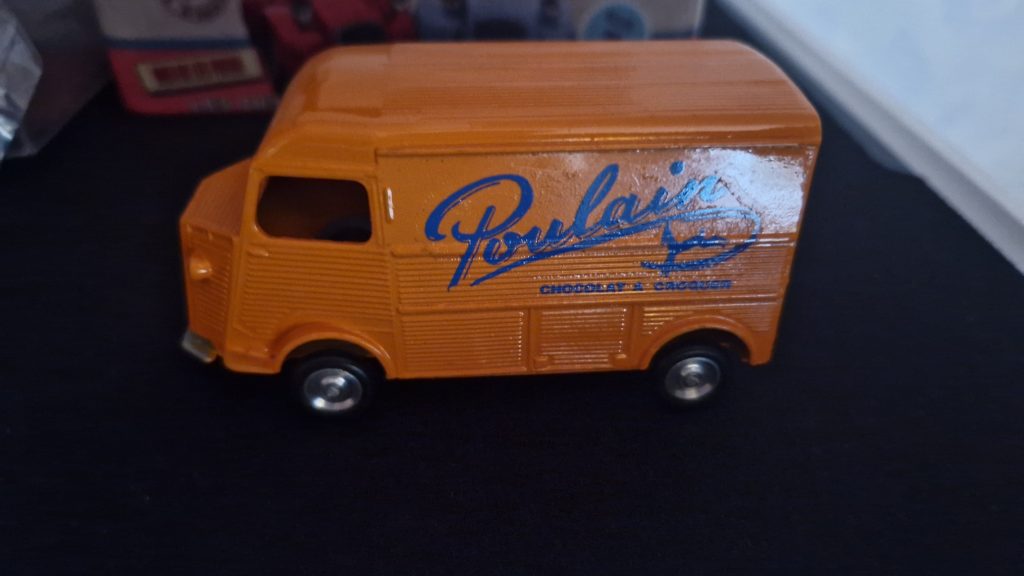
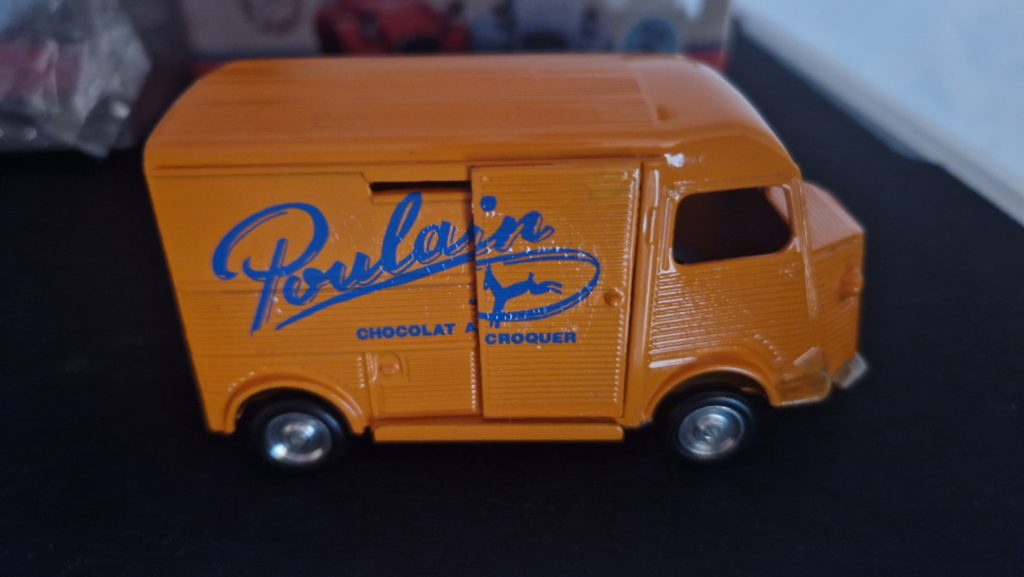
Rather than offering all these models in an identical form, I have chosen to leave a real place for the taste and imagination of each collector. The Type H lends itself wonderfully to this exercise: whether as an artisan's vehicle, an advertising van, a service vehicle or a simple utility vehicle, during its long career it has worn extremely varied liveries.
JRD, a great name in French miniatures
For several generations of collectors, the three letters JRD immediately evoke fine French metal toy cars.
The Jean Rabier-Donot brand notably reproduced numerous Citroën vehicles. The Type H 1200 kg is one of these iconic models, recognisable at a glance and today particularly prized by vintage toy collectors.
In the mid-1980s, the JRD name made a comeback with JRD 1985. Several historical models from the brand were brought back into the spotlight, among them the famous Citroën van.
This original stock therefore constitutes an interesting testament to this new period in JRD's history. Above all, it offers the opportunity to bring these miniatures back to life today, more than forty years after they were manufactured.
The Citroën Type H 1200 kgs in miniature
With its corrugated bodywork, immediately identifiable silhouette and friendly charm, the Citroën Type H has become one of the most famous French commercial vehicles.
This popularity is naturally reflected in the world of miniatures. The van on its own makes a fine collector's piece, but it also represents an excellent base for imagining promotional, commercial or artisanal versions.
A simple change of colour or decoration is enough to give it a completely different character. It is this versatility that I want to make the most of, using the stock I’ve managed to source.
Three possibilities for collectors
So that everyone can choose the option that best suits their collection and desires, the 1985 Citroën Type H JRD will be offered in three different ways.
The assembly kit with its original box
The first option is for hobbyists who wish to make their own model.
The model will be offered as a build-it-yourself kit, complete with its original JRD box. An opportunity to rediscover the pleasure of assembly, to choose the finish yourself and, why not, to imagine a completely personal decoration.
A custom template
Do you have a particular Type H in mind, or a colour, a vintage sign or a design that’s close to your heart?
I can also create a bespoke model based on this design. Each request will be assessed on a case-by-case basis, taking into account the project and the technical feasibility. The aim will be to create an original miniature that reflects the theme of your collection or a personal memory.
A built model ready to join your display cabinet
Finally, I will gradually create several versions, assembled and decorated as my inspiration takes me.
These models will be showcased on Garage143 as and when they are completed. Collectors will then be able to choose directly from the available items, ready to be displayed in a showcase.
Whilst we wait for the first models…
Putting the kits together and producing the first versions will take a little time.
While waiting to be able to present them to you, I invite you to discover the history of JRD through a booklet dedicated to this great French brand of miniatures.
Download the booklet dedicated to the JRD brand for free :
The number of models from this original stock is, of course, limited.
If you are interested in a self-assembly kit, a custom creation, or one of the models that I will be making, you can contact me right now using the website's contact form.
Please remember to specify «Type H JRD 1985» in your message, along with the design you’re interested in. You can also let me know your initial ideas if you’re considering a bespoke design.
Your messages will help me to better understand what you are looking for and to keep you informed about the availability of kits and completed models.
Conclusion
This 1985 Citroën Type H JRD is much more than just a model kit to assemble. It represents a little piece of French toy car history that can now find a new lease of life.
To be built in its original configuration, customised to your heart's content, or chosen from my future creations: it's up to you to imagine the Type H that will join your collection!
Citroën Méhari US: America at the end of the double chevrons
Some cars already seem original in their most common version. And then there are, within these very atypical models, even rarer variants, almost confidential, which immediately attract the collector's attention. The American Citroën Méhari is one of those.
Already unconventional in Europe, with its ABS plastic bodywork, beach car look and laid-back utilitarian spirit, the Méhari takes on a completely different personality when it crosses the Atlantic. Adapted to American standards, produced in very small numbers for that market, it became an absolute curiosity in Citroën's history.
It is this rare version, recognisable at a glance, that I have decided to reproduce in 1/43 scale.
1/43 scale project – The side lights are still missing
Historical reminder: the Méhari, a Citroën unlike any other
The Méhari was unveiled by Citroën on 16 May 1968 at the Deauville golf course. Created by Roland de La Poype, it is based on a Dyane 6 platform and features an ABS plastic bodywork—a modern material for the time, which was coloured throughout, lightweight, washable and largely resistant to corrosion. Citroën produced 144,953 examples of it between 1968 and 1987, including 1,213 Méhari 4×4s.Stellantis Media)
The Méhari is at once a leisure pick-up, a holiday car, a small utility vehicle and a totally unique automotive object. Its bodywork, made up of simple elements, its hose-washable interior and its modularity make it a practical, economical and instantly appealing car.Citroën Origins)
Its very name evokes travel: the méhari is a Saharan dromedary renowned for its endurance, its frugality and its ability to cross difficult terrain. A name perfectly suited to this light, simple and resourceful Citroën. (Stellantis Media)
The American Méhari: a French car built to US standards
At the turn of the 1970s, Citroën was still trying to maintain a presence in the United States. The DS was already familiar to a niche clientele there, and the Méhari might have seemed appealing in certain regions such as California or Hawaii, where the idea of a simple, open-top leisure vehicle seemed a natural fit. Citroën therefore adapted the Méhari to American specifications to enable it to go on sale from 1970. (Classic Cars)
This version features numerous modifications. The most noticeable change is at the front: the small European headlamps have been replaced by large 7-inch sealed-beam headlamps, as required by US regulations. The front end has therefore been radically altered, taking on a much more imposing and almost naive appearance. Added to this are side marker lights, reflectors, reversing lights, a right-hand rear bumper, a special rear side panel designed to accommodate an American number plate, and a two-speed windscreen wiper motor. (Classic Cars)
In the United States, the Méhari is classified as a ‘truck’, that is to say, as a small commercial vehicle. This classification allows it to circumvent certain restrictions applicable to passenger cars, particularly as the plastic bodywork posed difficulties in terms of type-approval. (Classic Cars)
His career in the US, however, was to be very short-lived. The figures vary depending on the source: *L’Argus* puts the number at around 1,000 units that crossed the Atlantic between 1970 and 1971, whilst other sources state that fewer than 1,000 were produced for this market and only 214 were sold in 1970, some of them in Hawaii. In any case, the US Méhari remains an extremely rare model. (L'Argus)
An instantly recognisable silhouette
What makes the US Méhari such an exciting car to reproduce is precisely this contrast between the French simplicity of the original model and American regulatory constraints.
The large headlights completely transform its look. The side lights, reflectors, rear details and the US-style number plate give it a very different look. You can still recognise the Méhari, of course, but it looks as though it’s been dressed up to star in a 1970s American film.
It has that very special charm found in export cars: a familiar model, but adapted to the regulations of another country. It’s exactly the sort of variant that deserves a place in a collector’s display cabinet.
1:43 scale miniature Méharis
The Citroën Méhari has already been widely reproduced in 1:43 scale. In particular, Norev versions can be found, including 1978 Méharis in light blue, khaki or Kirghiz orange currently listed on the brand's official boutique.Norev)
Other manufacturers or collections have also offered 1/43 scale Méharis: Solido, IXO, Eligor, Universal Hobbies, Atlas, Salvat, Mondo Motors, as well as partwork and promotional models. There are numerous variants: standard Méhari, Méhari 4x4, Tour de France versions, ice-cream vendor, fishmonger, military, gendarmerie, beach, Argentine, and promotional editions.voiture-miniature.com)
However, after doing some research, I couldn’t find any commonly available, clearly identified 1:43 scale models of the American Méhari. Whilst there are plenty of Méhari model cars available, this US version – with its distinctive front end and unique features – seems to be missing from the usual range.
It is precisely this lack that makes the project interesting.
The Garage143 project: the US Méhari in 1/43 scale
So I decided to tackle this rare version of the Méhari: the 1970 American Méhari.
The aim is to produce a faithful 1:43 scale model, capturing the distinctive features of this version: the modified front end, the large sealed-beam headlights, the side lights, the specific rear details and the overall look of this Méhari, which was designed for the American market.
As always, it is not simply a matter of producing yet another Méhari replica, but of offering a miniature model that tells a story. The story of a French Citroën that set out to try its luck in the United States, was adapted to local standards, sold in very small numbers, and has since become a real curiosity for fans of the brand.
This future scale model will be produced in a limited run, in the spirit of Garage143 creations: rare models, sometimes forgotten, often absent from mainstream catalogues, but which nonetheless deserve their rightful place in a 1/43 Citroën collection.
Conclusion
The Citroën Méhari US is a paradoxical car: simple yet rare, lightweight yet subject to regulations, French yet designed for America. It retains the Méhari’s cheerful spirit whilst displaying a completely different personality.
For the collector, it is a truly unique piece. For the Citroën enthusiast, it serves as a reminder that the chevron-badged marque has always dared to think outside the box, sometimes straying very far from its roots.
It is this uniqueness that I wish to bring back to life in miniature.
The 1:43-scale American Méhari will soon be joining the Garage143 range. A rare little Citroën, having taken a long detour via the United States, ready to take its place in your display cabinets.
The heatwave conditions of recent weeks were not conducive to manufacturing, so the project has fallen behind. I took the opportunity to completely overhaul the bodywork, particularly the headlights which on the test model (see below) were much too big. I will post new photos at the end of the week. The model is ready to be sent to Carrosserie Fallegger for final approval; production for interested collectors will follow. Thank you for your patience and support!
Exclusive: the Citroën 2CV Aerosport Fallegger
Certain models instantly impose themselves as obvious choices for the die-cast car collector. Not because of their widespread distribution, quite the contrary, but because of their scarcity, their extraordinary silhouette and the singular story they tell. The Citroën 2CV Aérosport carried out by the body shop Fallegger is undeniably one of them.
This striking interpretation of the 2CV, with its highly personal style and lines inspired by the great aerodynamic coachwork of the past, constitutes a unique piece in the Citroën universe. At once surprising, elegant and atypical, it has everything to catch the eye of the enthusiast of rare models: a strong visual identity, a little-known history and an absolutely unique character.
It is therefore with real pleasure that I can announce to you that’with the agreement of Mr Rudolph Fallegger, I am going to undertake the production of this car as a 1:43 scale miniature.
The project
As with every project of this type, the aim will be to offer a faithful reproduction of this very distinctive bodywork, respecting as closely as possible its volumes, proportions and the details that make up all the charm of this creation. For fans of unusual Citroëns, prototypes, special bodywork or simply miniatures off the beaten track, this future creation should hold a special place in a collection.
This thumbnail will be featured in short series, with an anticipated availability for the second half of 2026. This will be a limited-run production, designed above all for collectors who appreciate rare models that are hard to find and rarely or never reproduced at this scale.
To find out more
In a universe where many collections are built around the major, unmissable classics, it is always exciting to be able to integrate a more unexpected piece, almost confidential, but immediately remarkable in a display case. This 2CV Aérosport Fallegger fits fully into this category: that of miniatures that intrigue, spark curiosity, and give a collection a true personality.
Interested collectors can now contact me via the contact form on the website. This will allow me to identify people who might be interested in this upcoming series and to keep you updated as the project progresses.
A rare, original and deeply atypical new feature to follow soon on Garage143.
The history of the motor car is punctuated by bold projects, by futuristic visions that sometimes never see the light of day. The Citroën Citela is one of them. Quite a while ago now, I had the urge to bring it back to life, in my own way, in 1/43 scale. I made a test copy, and then I moved on to other things, notably my first shared model, the Type J. It was thanks to this first creation and another miniature designer collector (Peter, better known as Marpytoysthat the project was revived and has resulted today in different versions of this miniature.
Historical reminder: the dawn of the electrical age
In the early 1990s, European cities, and Paris in particular, were suffocating. Traffic was heavy, pollution omnipresent and parking a daily headache. It was against this backdrop that Citroën, true to its reputation as an innovative manufacturer, revived its research into the electric car. The ECO 2000 project, carried out a few years earlier, had already paved the way. But with the Citela, presented in 1992 at the Seville Universal Exposition, the double-chevron brand went much further.
An ambitious project: modularity serving the urban environment
The Citela (for CITy ELectric Automobile) is not just a simple electric car. It was a true «transformer» ahead of its time. Designed by the coachbuilder Heuliez, it is based on a technical platform to which an interchangeable passenger cell can be attached. In less than five minutes, the Citela can thus transform into a city car, a pick-up, a cabriolet or even a small utility vehicle. Unprecedented versatility, designed to adapt to all the needs of urban life.
Technical specifications
Characteristic
Value
Engine
72 V / 20 kW electric
Batteries
Nickel-Cadmium (NiCd)
Autonomy
110 km (urban cycling) to 210 km (steady speed)
Maximum speed
110 km/h
Acceleration
0 to 50 km/h in 8 seconds
Weight
790 kg
Length
2.96 m
Top-up
8 hours from a standard socket, rapid charging available
A comprehensive ecological vision
Beyond its clean engine, the Citela is designed to be environmentally friendly from its conception to its recycling. Its bodywork is made of recycled plastic, and all parts are marked to facilitate their treatment at the end of their life. Silent and non-polluting, it embodies a harmonious vision of urban mobility.
An unexpected inheritance
Despite extensive testing (the prototypes reportedly covered over a million kilometres!), the Citela was never released for sale. Too far ahead of its time? Undoubtedly. But its legacy was not in vain. The powertrain developed for this concept served as the basis for the PSA Group’s first production electric cars: the Citroën AX and Peugeot 106 Électrique. A pilot project was even planned in La Rochelle, which could have become the first city in the world with a network of public charging points.
The Citela in miniature: a collaboration between passionate collectors
We have pooled the documentation on the model and done some extra research. Not easy... Peter has done a lot of modelling for the interior and the layout using the bodywork elements I had modelled. We'll let you appreciate the result. Head over to the website of Marpytoys.
This photograph, kindly provided by Mr Julius Goldmann, author of the book «Citroën Aulnay», and following on from my first diorama on CX, was a motivating challenge. Here is the result of my work; I hope you will appreciate it.
Thanks to Frédéric, a knowledgeable collector who gave me the challenge of reproducing this engine from the legendary Traction 22 hp in 1/43 scale. I took up this challenge with enthusiasm and passion, and I hope you will like the result.
Historical reminder
The V8 engine is not originally American! Its development is generally attributed to the French engineer Léon Levavasseur, who in 1902 created an eight-cylinder V engine initially intended for aviation, under the Antoinette brand.
An audacious project
In 1934, Citroën, already a pioneer with its Traction Avant, envisaged a high-end model to compete with prestige brands. The 22 CV was to embody this ambition, featuring a 3.8-litre V8 engine developing around 100 horsepower, allowing for a top speed of 140 km/h.
Technical specifications
Engine 90° V8, 3822 cm³
Power 100 ch
Consumption Approximately 16 L/100 km
An aborted production
Despite prototypes being presented at the Paris Motor Show in 1934, the 22 CV was never mass-produced. Citroën's financial difficulties, heightened by the economic crisis, and the technical challenges linked to the V8 engine led to the abandonment of the project.
An iconic model
Today, the Traction 22 CV V8 is considered a legendary model. Very few examples were produced, and their fate remains uncertain. Some are said to have been converted into 11 CV models, while others are believed to have disappeared. A rare item, a specific headlight trim for the 22 CV, was sold at auction in 2019 for over 5,000 euros.
The miniature V8 engine: a rarity for collectors
Unlike the bodywork of the Traction 22 CV, reproduced by several manufacturers in 1/43 scale, the specific V8 engine for this model has not seen an independent miniature reproduction by traditional manufacturers in the sector (NOREV, Solido, etc.). Thus, enthusiasts wishing to acquire a scale model of the 22 CV's V8 engine will have to turn to artisan creations (such as that of Mr J. Aubineau)... or like the one I am presenting to you here!
The motor is available painted or unpainted, with or without its mounting bracket. Please let me know what you are interested in.
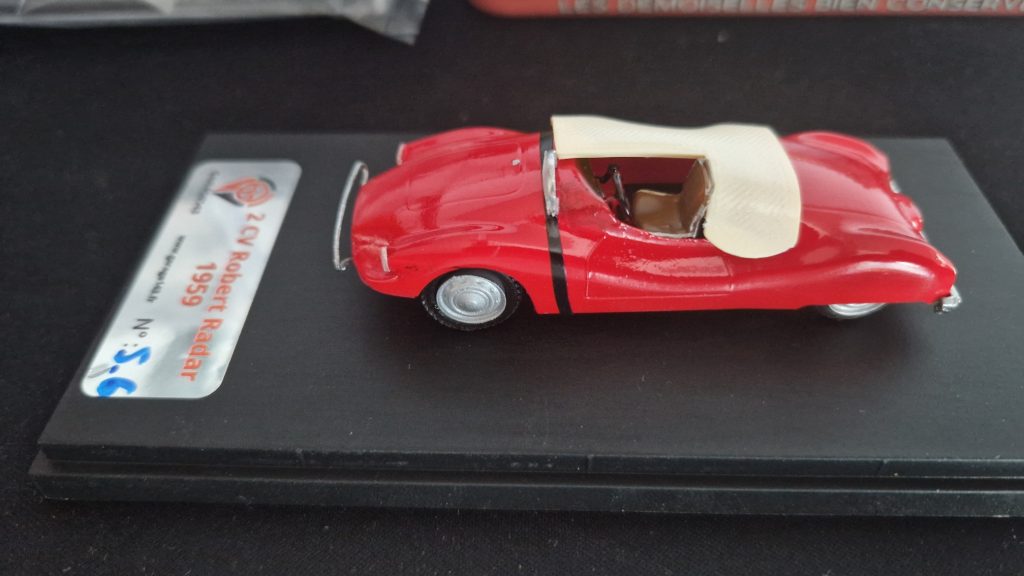
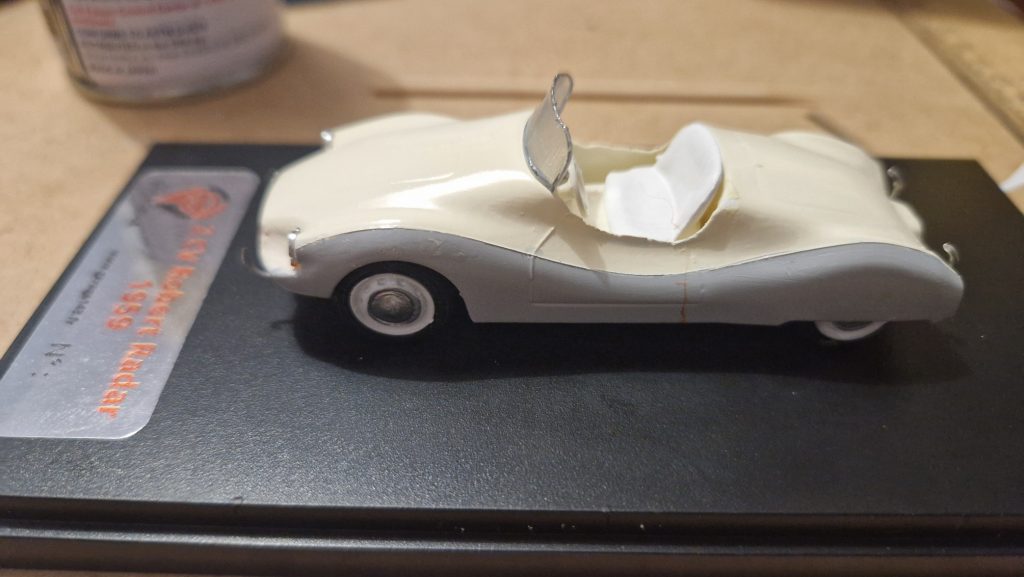
The 2cv Robert RADAR will celebrate its seventieth anniversary this year. On this occasion you will be able to discover it at Spa-Francorchamps. I am taking this opportunity to thank Madame Lisou RADAR, granddaughter of the creator, for having given me a photocopy of the original patent filing. This allows me to enclose an interesting historical facsimile with your miniature! Here are some photos of the miniatures already delivered. Version, colour, with or without hood, the choice is yours!
An unsung Belgian sportswoman
Birth of an unusual sportswoman
In 1956, Robert Radar, a Citroën dealer in Liège, set out to transform the famous 2CV into an attractive sporty roadster. The objective? To offer a dynamic and elegant variant while preserving the legendary mechanical qualities of the 2CV.
The major distinctive feature of the 2CV Radar lies in its polyester bodywork, an innovative material at the time. Thanks to its lightness and improved aerodynamics, it displays a streamlined silhouette, noticeably more sporty than that of a traditional 2CV. Its chassis also benefits from modifications, notably a reinforced suspension through the addition of a stabiliser.
Optimised mechanics
Under the bonnet, the 425 cc twin-cylinder engine benefits from a few notable improvements, including a twin carburettor, enabling the small Belgian sports car to reach a top speed that was remarkable for its time: 120 km/h.
A limited and exclusive production
Initially designed as five prototypes in 1956 (three complete models and two in kit form), the 2CV Radar was finally produced in a small production run between 1959 and 1962 at the Belgian factory in Forest. Around twenty assembled cars were marketed, accompanied by approximately forty additional bodies sold in kit form for knowledgeable enthusiasts wishing to customise their own 2CV.
The 1/43 scale 2CV Radar miniatures
To date, and after my research, I have not found a reproduction of this model. So the challenge was on! I have made the 2 CV Radar as it appears in its red livery from the latest press releases. The bodywork is entirely in resin, with the seats made of PLA. I will also probably be offering you the versions visible here: https://www.prewarcar.fr/about-tough-to-crack-car-puzzle-155-2cv-radar#group-2 as well as a «made-to-measure» colour palette, because a web search will show you that almost everything has been done regarding colours on this vehicle. Feel free to fill in the short form at the bottom of this article to stay informed of the project's progress.
The 2 unique pieces for Mr Robert RADAR's little girls
Conclusion
The Citroën 2CV Radar remains to this day a little-known but fascinating vehicle in Belgian and European automotive history. Its rarity, combined with obvious creative audacity, makes it a highly prized car for discerning collectors, perfectly symbolising the spirit of innovation and passion that defines the Citroën universe. Today it can join your display cases and further add to the list of atypical 2CVs that make up your collection. To find out more, please do not hesitate to contact me! (Model available upon request)
The Citroën GS «Voiture sans Frontières»: An Icon of European Motoring
In 1971, Citroën presented a unique version of its GS, named the «Voiture sans Frontières». This exceptional model was created to celebrate the prestigious title of «European Car of the Year» awarded to the GS. Featuring a bodywork decorated with 34 flags representing the European countries of the time, this car symbolised the brand's unity and international success.
A Spectacular Presentation
The first public appearance of the Citroën GS «Voiture sans Frontières» took place at the Brussels Motor Show in January 1972. Produced in a very limited series, this car was not intended for sale. It was presented at various motor shows and in Citroën branches across Europe to illustrate Citroën's commitment to innovation and international openness.
A Hand-Painted Bodywork
The crafting of the bodywork was a true artistic feat. Painted by hand by specialist craftspeople, it required delicate and meticulous work. In Valenciennes, for example, it was the decorative painter Adrien Abadi who took on this challenge in 1971. In tribute to this iconic creation, his son, Alain Abadi, recreated a faithful replica of the «Voiture sans Frontières» in 2010, which has since been exhibited at numerous shows.
A Symbol of Innovation and Unity
The GS «Voiture sans Frontières» remains to this day a powerful symbol of Citroën's pioneering spirit. By representing all European nations on its bodywork, it embodied a vision of unity beyond borders, at a time when the idea of a united Europe was taking off.
Thumbnails
For enthusiasts and collectors, the Citroën GS «Voiture sans Frontières» is a true treasure. Although the original version remains rare, miniature replicas have been produced, notably by IXO Models in 1/43 scale and by Norev in 1/18 scale. As for me, I am not offering you the car, but a sheet of water-slide decals allowing you to reproduce it, particularly using the white 1/43 scale Norev GS as a base, which is easy to find at a reasonable price. To find out more, contact me.